

Massimiliano — or Massi, as his friends call him — agrees to speak about himself and share his life experience. An experience filled with depth, sensitivity, listening, introspection, beauty, imbalance and balance, nature, and passion…
It’s a Sunday morning, and we have a phone call scheduled between Turin (Italy) and Fuerteventura (Canary Islands).
“Hi Massi, good morning.”
“Hi Francesca, good morning to you. Have you already had a walk on the beach?”
It sounds like the beginning of an ordinary conversation — one of many — in a time of gradual reopening after lockdown.
But Massimiliano is anything but ordinary — he’s a force of nature.
It only takes a moment to realize that Massimiliano is an extraordinary person, someone who lives life to the fullest.
Massi takes me on a profound journey — and leaves me with the equally challenging task of translating it into this article.
“We are lucky — we live on an island. Even respecting all the regulations, we are still fortunate. Surrounded by the ocean and volcanoes, which recharge you.”
“My favorite island in Italy is Pantelleria. Islands bring you back into balance. We are made of water, and being on an island makes you feel that even more… we are made of water, and water is life.”
“Yes, Massi, absolutely. It makes you rediscover what truly matters.”
“Tell me how you fell in love with that island, and how the journey began that eventually brought you here.”
“It’s the same curiosity I feel about you — your connection with India, Ayurveda, and your relationship with that place. In previous conversations, you’ve always described yourself as a citizen of the world, with your heart rooted somewhere special — India.”
“Yes… there are elements that connect you to Ayurveda — which means ‘Science of Life’ — with ancient origins. It teaches us that life is based on three fundamental pillars: sleep, nutrition, and overall balance.”
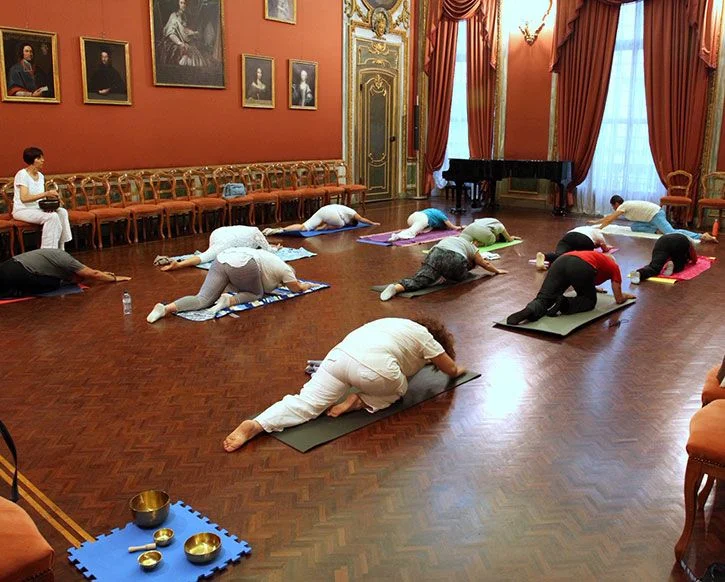
Massi speaks about the ancient origins of Ayurveda — not only as a body of wisdom passed down through generations over centuries, but also as a science and a way of life. It is worth noting that ancient Ayurvedic texts already described Parkinson’s disease long before James Parkinson formally studied and defined it, offering valuable early insights into a condition that still bears his name today.
The importance of a healthy rhythm between sleep and wakefulness, balanced nutrition, and living in harmony reflects a lifestyle similar to that of farmers in earlier times. Their days were guided by light and darkness, their diet based on seasonal produce, and their lives shaped by the climate of the land they cultivated. A way of life deeply connected to nature. This connection to the Earth and the natural world allows for a higher quality of life.
The energy that arises from balance and harmony fosters wellbeing, prosperity, and a greater sense of inner light.
Massi recalls a powerful experience in Pantelleria with his wife, where they chose to stay in a traditional “dammuso” — a local stone house isolated from the modern world, with minimal use of electricity. There, they rediscovered the beauty of waking at dawn and resting at sunset.
A daily ritual: stepping outside into nature to enjoy breakfast under the first rays of sunlight, surrounded by birdsong and the pure presence of the natural world… something truly extraordinary.
“You realize that these were the rhythms of our grandparents. They worked incredibly hard, but caring for sleep was their most important form of self-care.”
Health and wellbeing are the core goals of Ayurveda — not only as a science, but as a philosophy of life.
Massimiliano discovered Ayurveda in Bratislava, shortly after being diagnosed with Parkinson’s, while he was there for work. He entered the Ayurveda center hesitantly, but was immediately struck by the fact that, before receiving any treatment, he was required to have a consultation with an Ayurvedic doctor. It made it clear to him that this was not a wellness or beauty center, but a true medical environment.
The consultation itself was very different from conventional medical visits: the doctor did not refer to him as a “patient” and chose to sit beside him rather than across a desk. Two simple details that completely changed the dynamic, the perspective, and the very concept of care. Massi had the opportunity to share his story and truly feel heard. The treatment that followed — a massage accompanied by music, incense, and herbal infusions — was deeply regenerative, both physically and emotionally.
Later, Dr. Morandi, from a leading Ayurveda center of excellence in Milan, recommended a specialized Ayurveda center in India, in Trissur, where Massimiliano undertook his first journey. He spent four weeks there, immersed in what he describes as a hospital-like environment. It was a deeply transformative experience: he wrote extensively, read a great deal, and reconnected with himself.
Since then, he has returned to India every year. For Massi, it is a time of rest aligned with the rhythms of nature — a time to listen to his body, to reconnect with his natural needs, and to “refill his energy reserves.”
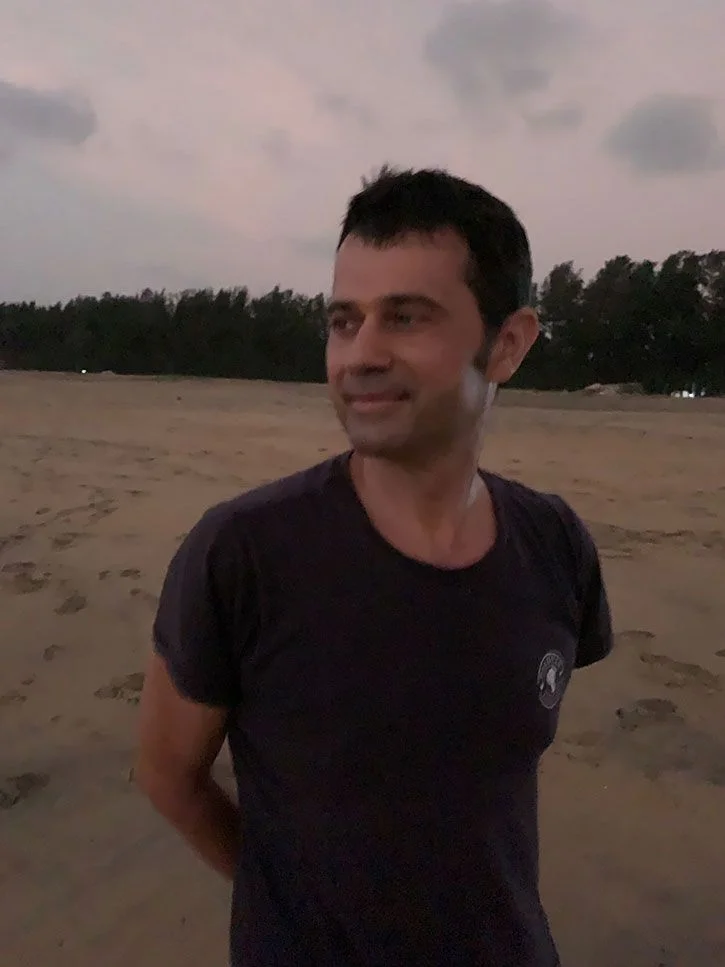
Massi currently travels to India once a year for about a month, staying in Ayurvedic centers — places that feel like a retreat from the chaos of the world. In the quiet of his room, he alternates moments of massage, treatments, meditation, and shared experiences with others.
Ayurvedic massages play a key role in restoring balance among the three doshas (Vata, Pitta, and Kapha), which represent different physical and energetic constitutions. The use of natural oils, carefully selected according to each person’s specific needs and rooted in ancient Ayurvedic knowledge, helps keep the body deeply hydrated. A well-hydrated body is also better able to cope with Parkinson’s. Applying oils across the entire body — including the head — greatly supports meditation.
Meditation itself is a fundamental part of Massi’s experience. It is a powerful tool for achieving quality sleep and calming the mind.
Another meaningful experience for Massimiliano has been his journey into yoga, particularly Laughter Yoga. The power of laughter — contagious and liberating — is especially valuable in contexts where anxiety and worry often dominate, sometimes intensifying the “off” phases of Parkinson’s.
Travel, for Massi, is an added value. Being able to travel alone, despite everything, is in itself a deeply empowering experience.
Massi then introduces a concept very close to his heart: the art of living in beauty.
He approaches it through a deeply introspective reflection, enriched by connections to today’s reality. He goes back to the years he spent caring for his father after a stroke — a long period of six years that ended with his father’s passing. Massi speaks openly about grief, the difficulty of processing loss, the pain, and the challenges that come with it.
If one is not prepared to face separation, letting go, and death with acceptance — understanding them as part of life itself — it can lead to a disconnection from the outside world. This imbalance may even manifest physically, as in Massi’s case, where it contributed to a deep disruption in dopamine production.
“It is important to accept things as they are and to live in beauty — also through art, such as dance and music…”
Massi has always had a connection with dance, but it intensified when he learned that the Ballet of Rome was opening auditions for people with Parkinson’s. He called, and Giovanna Garzotto from Dance Well answered, inviting him to Bassano instead, as he could not travel to Rome.
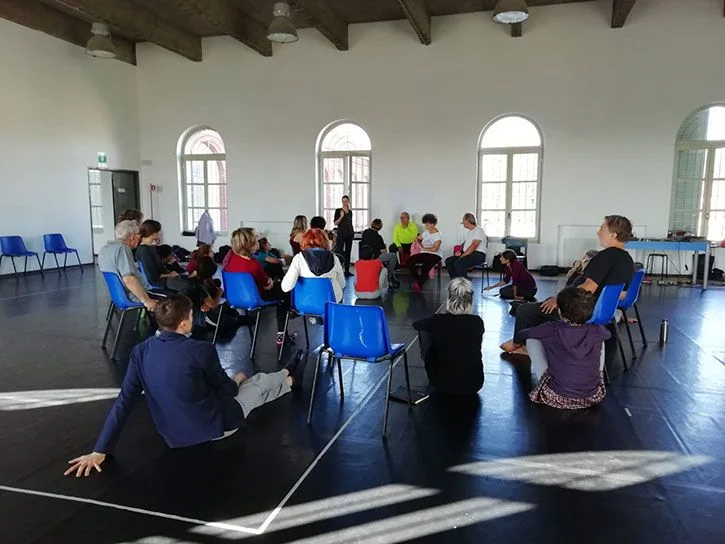
There, at the old pavilion of the Civic Museum of Bassano del Grappa, Massi found a remarkable group of people — students, individuals with Parkinson’s, political refugees — all dancing together on the grass. In that moment, he says, he experienced beauty in its purest form.
“Dancing through imagination, listening to your body, improvising, activating mirror neurons, and sharing within a group free of judgment — it gives you incredible energy, powerful vibrations,” Massi says, his voice full of life and enthusiasm.
Inspired by this experience, Massi decided to promote and share this practice, becoming an ambassador. He developed a project in collaboration with Lavanderia a Vapore, a center of excellence in Piedmont — known as a true home for dance — where his initiative was warmly welcomed.
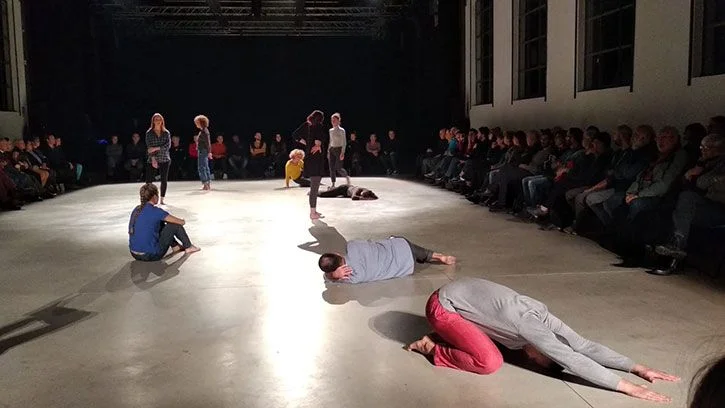
Together with fellow dancers, he also participated in two important performances, presented at events such as the Vignale Monferrato Festival and Primitive Accommodation for World Parkinson’s Day at Lavanderia a Vapore, both directed by choreographer Daniele Ninarello and attended by large audiences.
If dance is movement… then we are dance.